
.jpg)
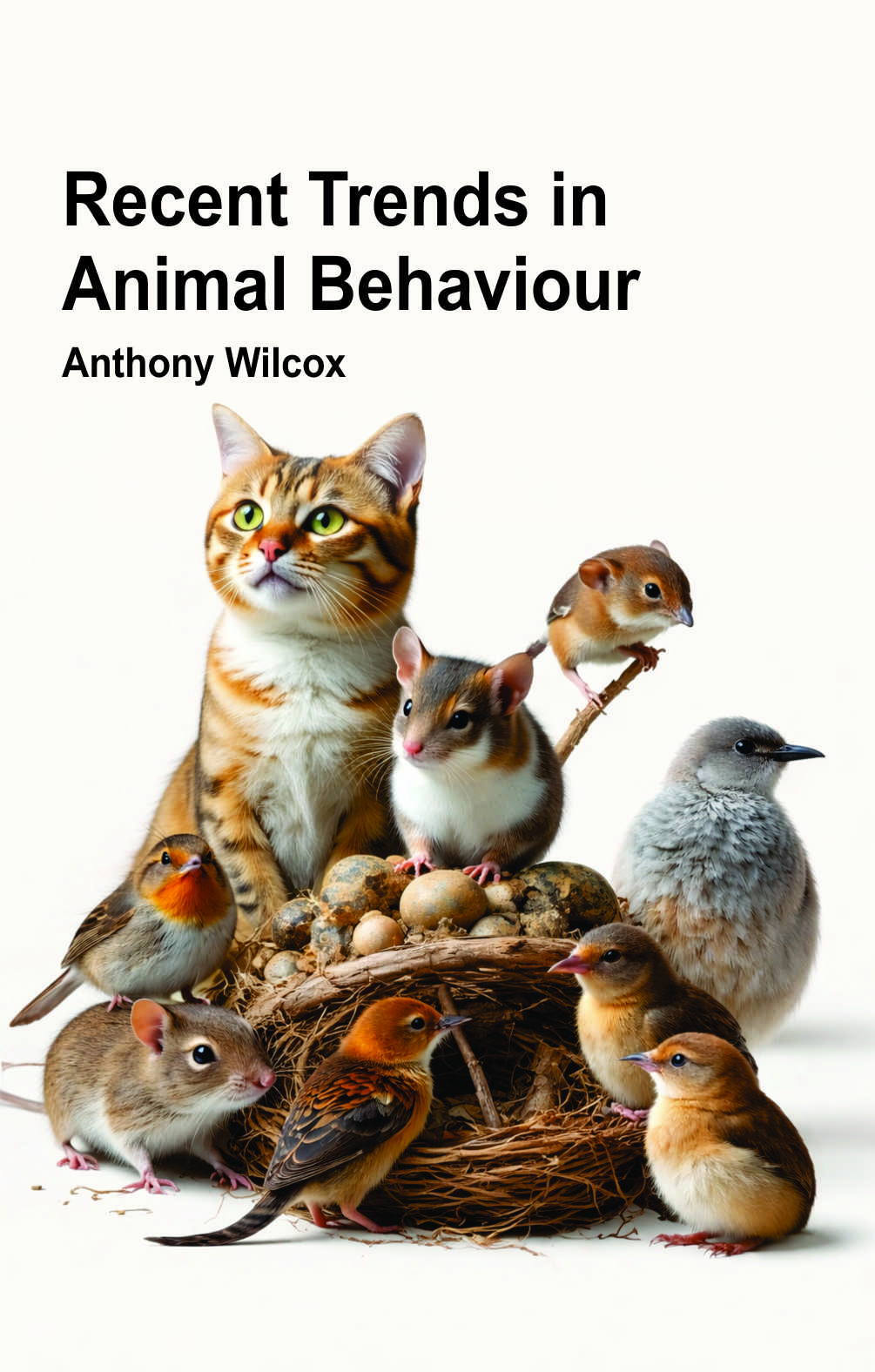
This book presents a contemporary academic analysis of recent trends in animal behaviour, examining how evolutionary processes, biological mechanisms, and environmental pressures shape behavioural patterns across species. It discusses behaviour as an adaptive outcome influenced by genetic inheritance, hormonal regulation, and natural selection. The text highlights the diversity of behavioural strategies observed in animals, including social interactions, nesting practices, and problem-solving abilities. Special attention is given to behavioural variation at the individual level, recognising temperament, learning capacity, and behavioural innovation as significant factors in animal survival and adaptation. By drawing on comparative observations from different species, the book illustrates how behaviour reflects both evolutionary history and present-day ecological demands, offering a scientifically grounded understanding of behavioural diversity.
The book also focuses on applied and analytical perspectives, linking behavioural research to animal welfare, conservation biology, and human–animal interaction. It examines how insights into animal behaviour contribute to ethical management, habitat design, and species conservation strategies. Written in a formal UK academic style, the book is intended for students, researchers, and professionals seeking an informed and critical understanding of modern developments in the scientific study of animal behaviour.