
.jpg)
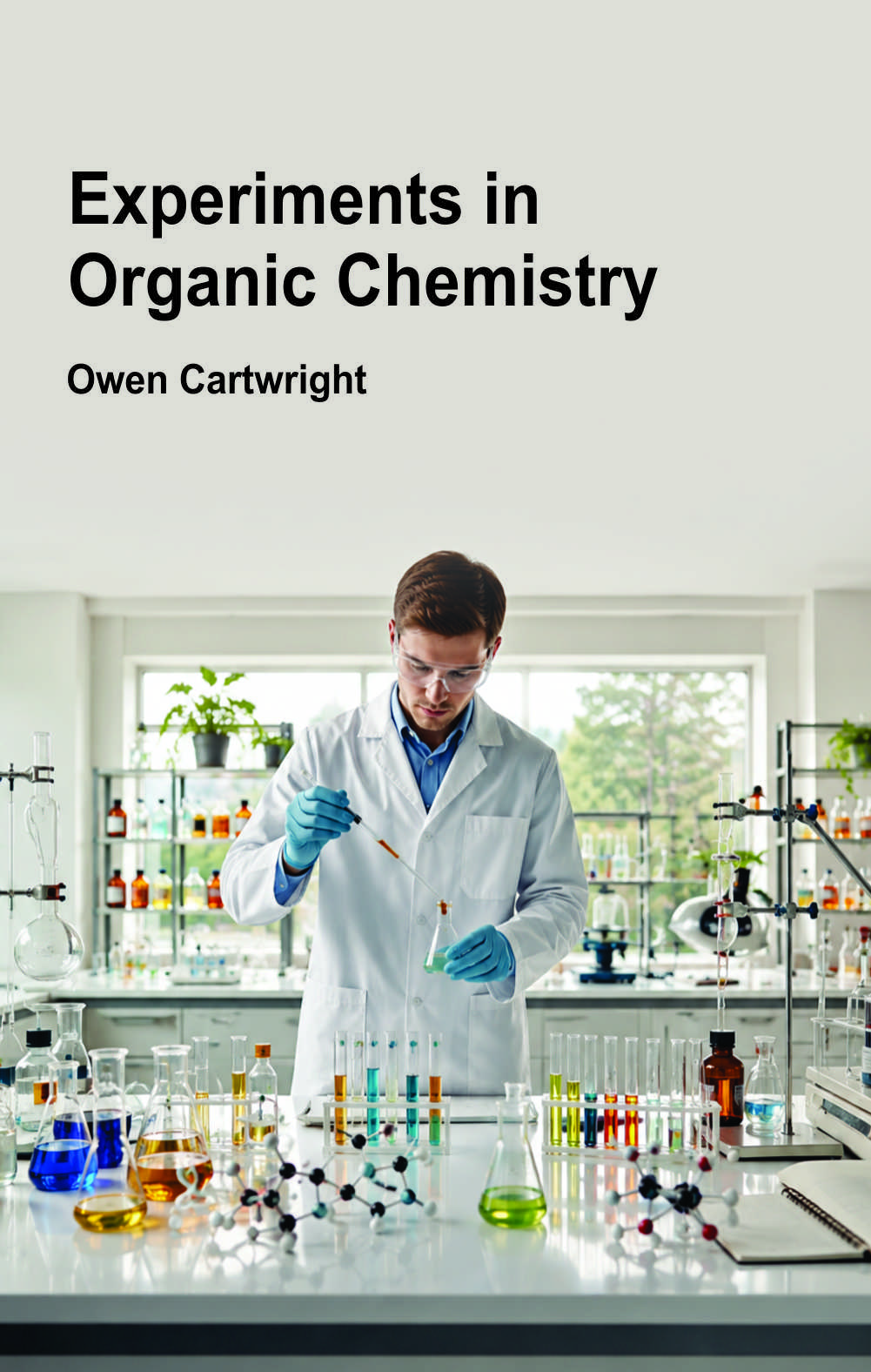
This book approaches organic chemistry from an experimental standpoint, emphasising the practical techniques and investigative methods used to explore the behaviour of organic compounds. It presents laboratory experimentation as a central tool for understanding chemical principles, allowing readers to observe how substances react, transform, and interact under controlled conditions. The text examines a variety of experimental procedures designed to illustrate fundamental concepts of organic chemistry, including reaction pathways, compound identification, and the use of specialised reagents. It also highlights the importance of careful observation, accurate measurement, and systematic analysis in obtaining reliable chemical results. Through practical exploration, readers gain insight into the relationship between theoretical knowledge and laboratory application, developing a clearer understanding of how organic chemistry operates in real scientific settings. The discussion encourages an investigative approach, demonstrating how experimentation contributes to discovery, verification, and the advancement of chemical knowledge.
The book aims to strengthen practical skills and scientific reasoning, enabling readers to conduct organic chemistry experiments with confidence and to interpret chemical observations through sound analytical and experimental methods.